Our First Christmas With a Caregiver
Wasn't What We Expected
Sarah Henderson called Atlee three weeks before Christmas. When Lori answered, Sarah's voice was tight, the way people sound when they're trying to stay composed.
"We need someone for Christmas Day," she said. "My mom has Parkinson's, and we just... we need help. But I'm worried this is going to ruin everything."
Lori listened. Then asked the question she always asks: "Tell me about mom."
And Sarah started talking. Not about Parkinson's symptoms or care needs. About her mom. About how Dorothy had hosted Christmas for 40 years. About how hard it was watching her struggle. About feeling guilty for needing help.
"I understand," Lori said. "And I want you to know—we're not here to take over your Christmas. We're here so you can actually be present for it."
That's what Sarah didn't know yet: sometimes the thing you're most afraid of becomes the thing that saves the day.
The Morning Everything Felt Wrong
Sarah's mom, Dorothy, had been declining steadily for eighteen months. The family had been managing, but barely. Sarah drove in from Highlands Ranch twice a week and her brother covered weekends. But the holidays were different. Dorothy wanted Christmas at her house in Littleton like always. The whole family together. Traditional.
Except Dorothy couldn't manage it anymore. Not safely. Not without help.
So they hired Maria through Atlee. Experienced. Great references. And arriving at 9 AM on Christmas morning.
When Maria knocked on the door, Sarah's teenage daughter whispered, "This is so weird."
And it was.
Maria was warm, professional, exactly what you'd want. But she was also a stranger in their kitchen while they opened presents. She helped Dorothy to the bathroom while everyone else tried not to notice. She was there when Sarah's brother made his famous terrible joke that always made their mom laugh—except this year, there was a witness.
"I felt like we were performing our family traditions for an audience," Sarah told me later. "Like we were trying to prove we were still... us."
The Moment That Changed Everything
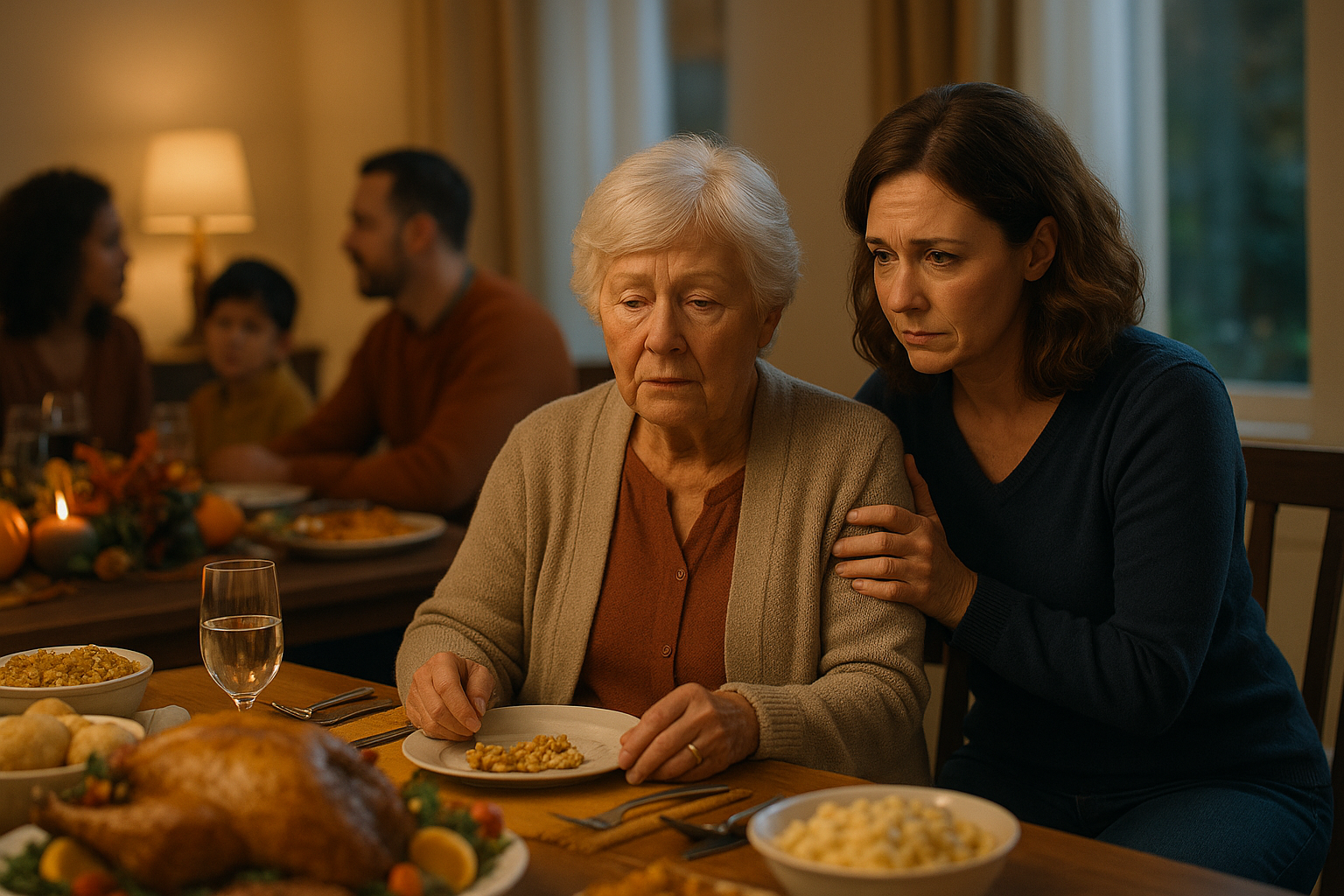
Around 2 PM, Dorothy started getting tired. The family knew the signs—she'd fade, get confused, sometimes agitated. This was the part of Parkinson's that scared them most during gatherings.
Sarah was in the kitchen, stress-cooking her third side dish, when she heard her mom's voice rising in the living room. That edge of panic. She rushed in to find Dorothy disoriented, trying to stand, convinced she needed to "get the turkey out" even though dinner was over.
Before Sarah could say anything, Maria was there. Not hovering, not making a big deal. She just sat next to Dorothy and started talking about the snow outside. Mentioned her own grandmother used to make pierogis every Christmas. Asked Dorothy if she'd ever made them.
Dorothy's breathing slowed. The panic drained away. Within two minutes, she was smiling, telling Maria about a Polish neighbor from fifty years ago.
Sarah's brother caught her eye from across the room. They'd been managing these episodes for months with varying success. Maria had managed it in seconds. Not because she was magic, but because she wasn't exhausted. She wasn't scared. She wasn't their daughter, trying to fix her own mother.
She was just someone who knew how to help.
What We Got Wrong About Holiday Caregiving
Later that evening, after Maria left, Sarah's family sat around the table longer than usual. They were supposed to feel relieved it was over. Instead, they felt something unexpected: grateful.
Not grateful in the "thank God that's done" way. Grateful that Maria had been there.
"I actually enjoyed Christmas this year," Sarah's brother said. "I wasn't worried the whole time."
Sarah realized she'd eaten a real meal. Sat down. Had a full conversation with her kids. For the first time in over a year, she'd been present at a family gathering instead of being the on-duty caregiver.
And Dorothy? She'd made it through the whole day without the meltdown they'd all been bracing for. She'd felt celebrated instead of managed.
Here's what Sarah got wrong in that initial phone call: she thought having a caregiver present would ruin Christmas. What she discovered was that trying to do it alone had been slowly ruining all of them for months.
The caregiver didn't take away from their family moment. She made the family moment possible.
When Dorothy Asked for More
Three days after Christmas, Dorothy asked Sarah a question that changed everything.
"When is Maria coming back?"
Sarah hadn't expected that. She'd assumed the one-day arrangement was just that. One day. A necessary accommodation for a difficult holiday.
But Dorothy had felt something different. For the first time in months, someone had helped her without making her feel broken. Maria hadn't hovered or corrected or sighed with frustration. She'd just been there, capable and kind, letting Dorothy be herself.
Sarah called Lori the next morning. Within a week, Maria was coming three times a week. Not because the family forced it. Because Dorothy wanted it.
That's what good care looks like. Not something imposed on your parent, but something they come to value themselves.
By February, the change in the family was unmistakable. They were softer with each other. Less tense. Sarah told Lori, "I didn't realize how much resentment I was carrying until it was gone."
That's what good care does. It doesn't just help your aging parent. It gives your whole family back to each other.
The Truth About Care During the Holidays
We get a lot of calls this time of year. Families like Sarah's who are desperate but conflicted. They want help, but they're afraid of what it means.
So let me be straight with you about what having a caregiver present for the holidays actually looks like:
Yes, it's a little awkward at first. There's someone new in your family rhythm. You're self-conscious. Your dad might get irritated. Your sister might cry in the bathroom because "this isn't how it used to be."
But here's what else happens. Someone helps your mom get dressed with dignity instead of your rushed frustration. Someone notices when your dad needs water before he gets agitated. Someone handles the physical tasks so you can hold your parent's hand. Talk with them. Be their child instead of their caregiver.
The best caregivers, like Maria, don't try to become family. They do something more valuable: they create space for your family to be a family again.
When You Know It's Time
If you're reading this and thinking, "That's us. That's our family," you probably already know you need help.
Maybe you're dreading the holidays because you're worried about what might happen. Maybe you've already had one disaster gathering and can't face another. Maybe you're just bone-tired and don't know how you'll pull this off.
Here's your permission: it's okay to ask for help. It's not giving up. It's not admitting defeat. It's choosing to protect something precious—your relationships with the people you love—by letting someone help carry the weight.
Sarah called Lori back in February. Dorothy now has care three days a week. The family is softer with each other. Less tense. Sarah told her, "I didn't realize how much resentment I was carrying until it was gone."
That's what good care does. It doesn't just help your aging parent. It gives your whole family back to each other.
Making Room at the Table
If you're facing a hard holiday this year, knowing your mom or dad needs more help than you can give, we should talk.
Not about schedules or rates. Just about what you're actually facing. What you're afraid might happen. What you wish could be different.
At Atlee, we've helped dozens of Denver families navigate their first holidays with care. Some need full-day support. Some just need someone there for a few hours to handle the hard parts. We'll figure out what fits.
Because here's the thing about that "stranger" you're worried about inviting into your Christmas: sometimes the people who know us least see us most clearly. They're not tangled up in history or heartbreak. They can just show up and help.
And sometimes that's exactly what everyone needs.
Ready to talk about holiday care options?
📞 Call Atlee Home Care: (720) 378-8708
🌐 Visit us: www.atleecare.com
Serving Denver families throughout the metro area: Denver, Aurora, Lakewood, Westminster, Thornton, Arvada, Littleton, Highlands Ranch, Centennial, and surrounding Colorado communities.
At Atlee Home Care, we understand that the holidays can be both beautiful and overwhelming when caring for aging parents. Our experienced independent caregivers provide dignified, professional support that allows families to focus on what matters most: being together. Contact us today for a free consultation.